

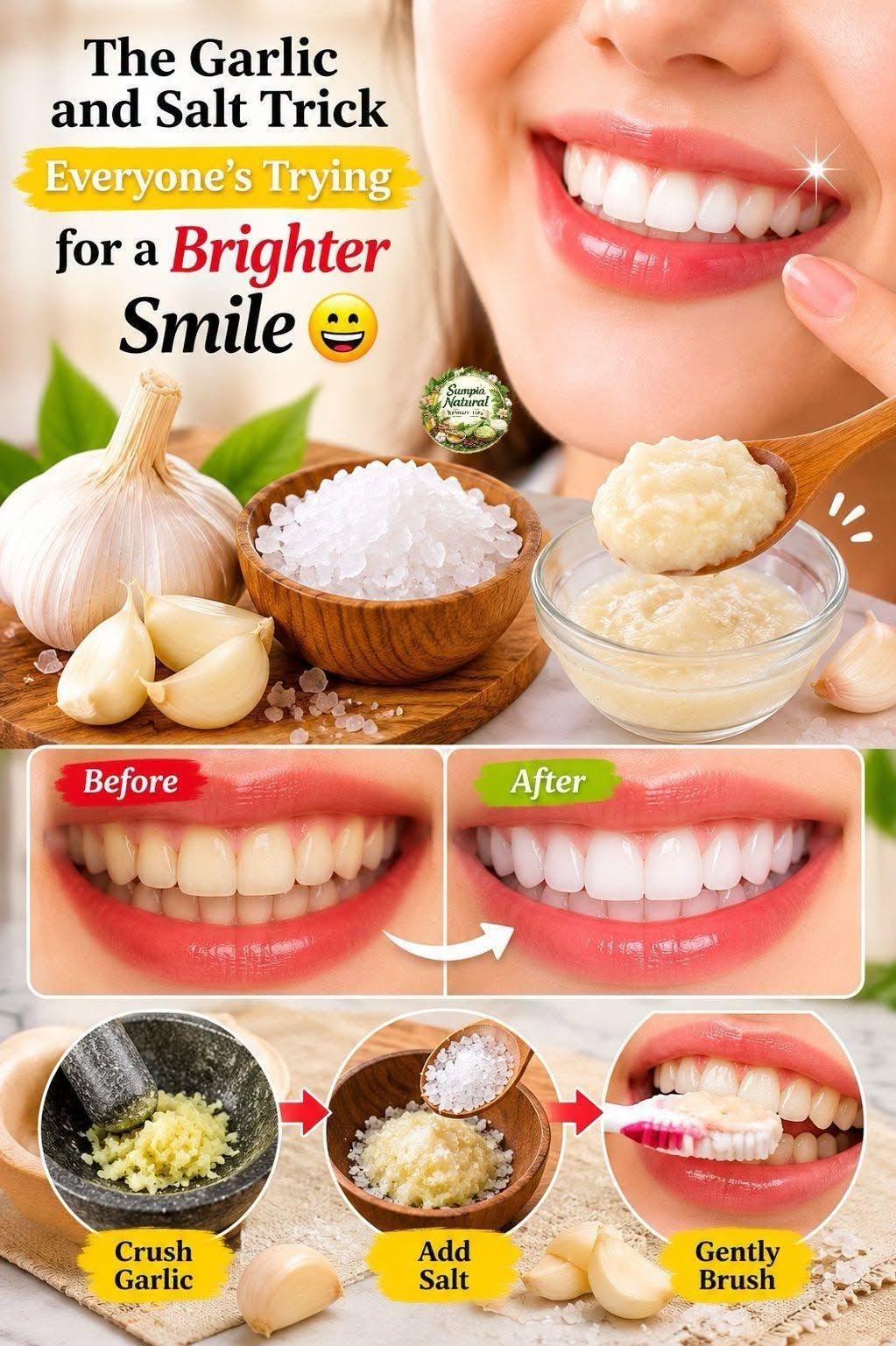
Many social media posts claim that brushing with crushed garlic and salt produces dramatic whitening results. These claims are not supported by clinical research.
Potential risks include:
- Enamel wear from abrasive scrubbing
- Gum irritation
- Bad breath
- Increased tooth sensitivity
- Mouth burns from raw garlic
Once enamel is worn away, it cannot grow back.
If You Still Want to Try It
Dentists generally do not recommend brushing with garlic and salt.
If you choose to experiment anyway:
- Use only a tiny amount.
- Do not scrub aggressively.
- Avoid using coarse salt.
- Do not repeat regularly.
- Stop immediately if your gums burn or become sore.
Better Ways to Brighten Your Smile
For safer, evidence-based whitening:
Brush Twice Daily
Use a fluoride toothpaste to remove everyday surface stains and protect enamel.
Floss Every Day
Removing plaque between teeth helps your smile look cleaner and healthier.
Limit Staining Drinks
Coffee, tea, red wine, and cola can gradually stain teeth.
Rinse with Water
After drinking staining beverages, rinse your mouth with water to reduce staining.
Professional Whitening
Dentist-supervised whitening treatments provide the most noticeable and safest results.
A Gentle Homemade Option
If you simply want a cleaner-feeling mouth, try this instead:
Warm Salt Water Rinse
Ingredients
- 1 cup warm water
- ½ teaspoon salt
Instructions
- Stir until dissolved.
- Swish for 20–30 seconds.
- Spit out.
- Do not swallow.
This may help soothe irritated gums but will not whiten teeth.
Foods That Naturally Support Oral Health
Include foods that promote saliva production and overall dental health:
- Apples
- Carrots
- Celery
- Cheese
- Plain yogurt
- Leafy greens
These foods won’t bleach teeth, but they can support a healthy mouth.
Final Thoughts
Garlic and salt are not proven teeth-whitening treatments. While garlic has natural antibacterial compounds and salt can be used in a gentle mouth rinse, brushing with a garlic-and-salt paste is unlikely to whiten teeth and may irritate your gums or wear down enamel. For a brighter smile, consistent oral hygiene, limiting stain-causing foods and drinks, and using dentist-approved whitening products are much safer and more effective